Video pieces
Excerpts from audio-visual projects exploring approaches such as data-driven music and animation, feedback loops and data-moshing.
Work where sound and picture work together to create a complete piece. Most of the pieces presented here are works in progress, excerpts from bigger projects that I am currently working on. All music, sound and animation shown on this page is produced by me or as a collaboration if stated separately.
Excerpts from audio-visual projects exploring approaches such as data-driven music and animation, feedback loops and data-moshing.
An oscilloscope that runs in the browser and visualises sound in real time. It takes any audio input: a hardware synth through an audio interface, a microphone, or the music playing internally on the computer. It can visualise the sound as a waveform, a frequency spectrum, a Lissajous figure or a spectrogram.
Four views can run side by side, each with its own settings. It is written in plain JavaScript with no build step, so it runs from any web server.
The oscilloscope is also hosted at web-oscillator.vercel.app.
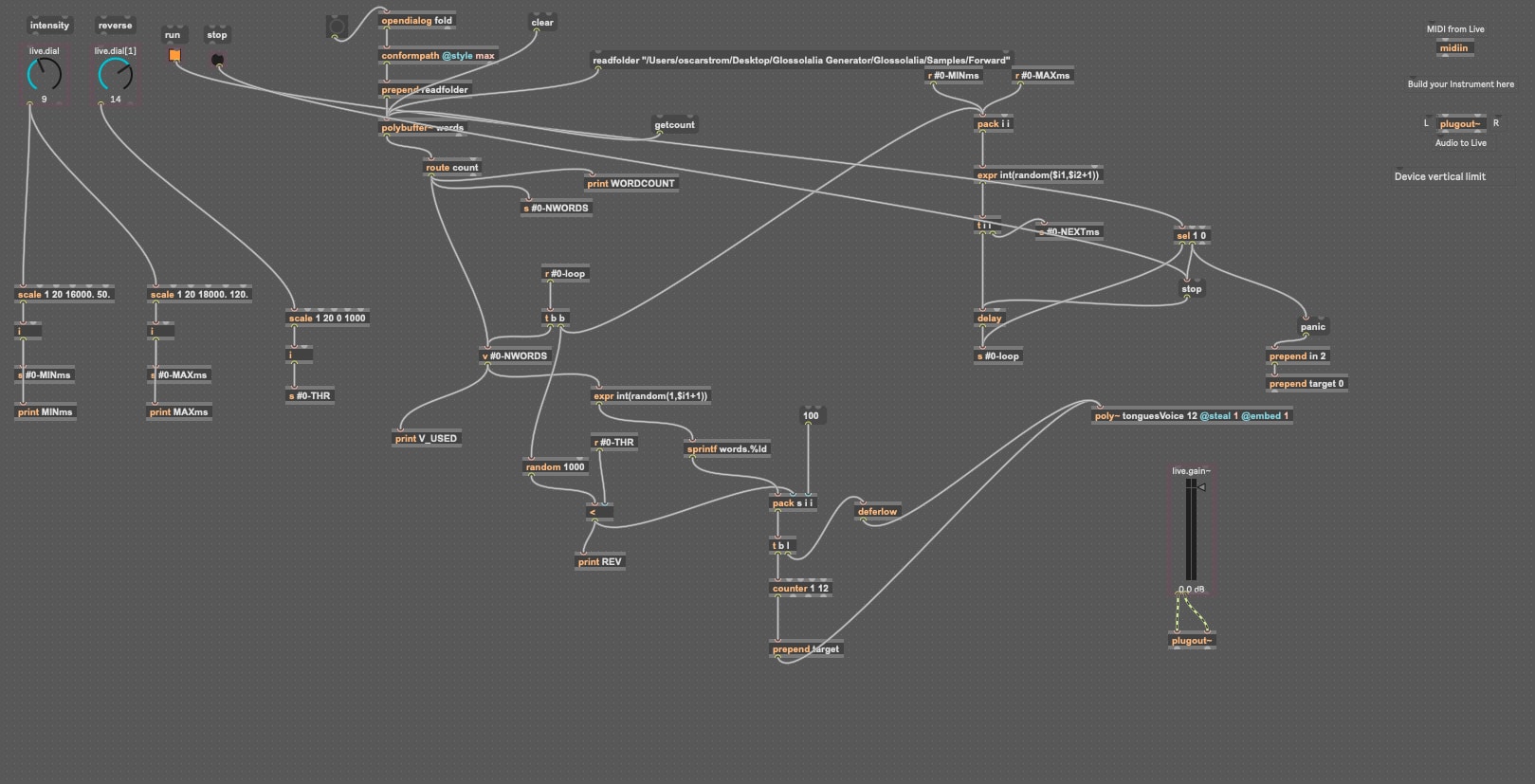
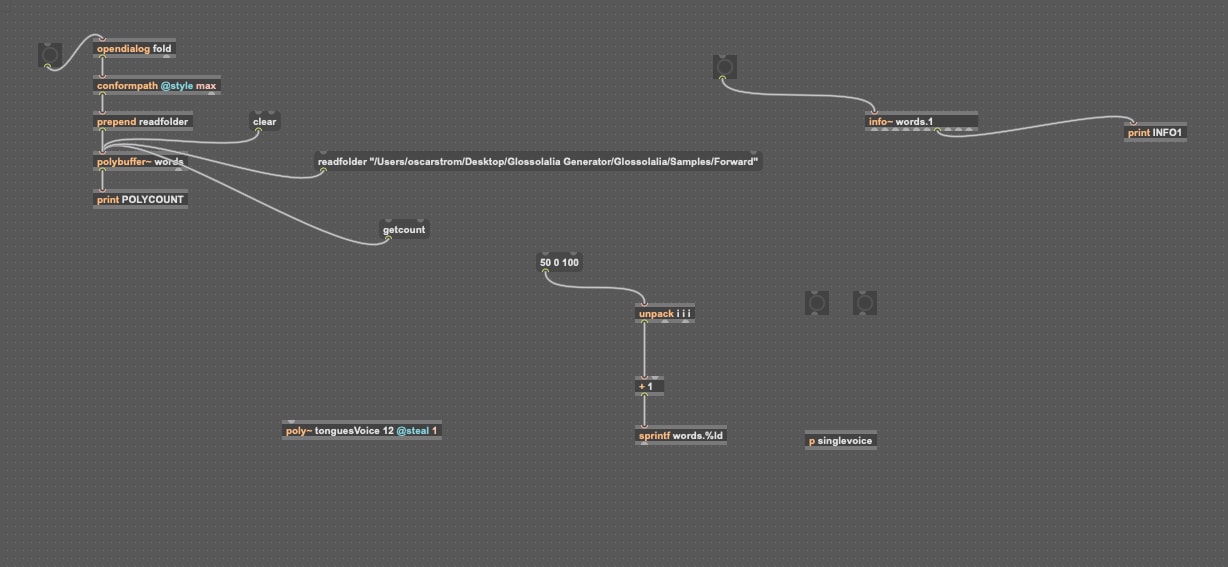
Glossolalia is an instrument inspired by speaking in tongues. It can play any audio samples over each other, up to twelve at a time, with one dial for how intense it gets and one for how much of it runs in reverse, while the words appear on the screen. The intended use case is feeding it audio samples where one sample is one word.
The first version was a collaboration with Eelis Lähteenaro, and we performed it together with Ludvig Lindström and Anna Jegorova, at the release of Tidskrift Anomi's Ande in June 2025. I then rebuilt it as a Max for Live device, so that I could play it inside Ableton Live together with my other audio-visual tools, like the body tracking systems. This version was used for a performance at Restaurang Landet in Hägersten. In the recording below it plays through an early version of the Deep Leap app, which bends the sound as I move my hands.
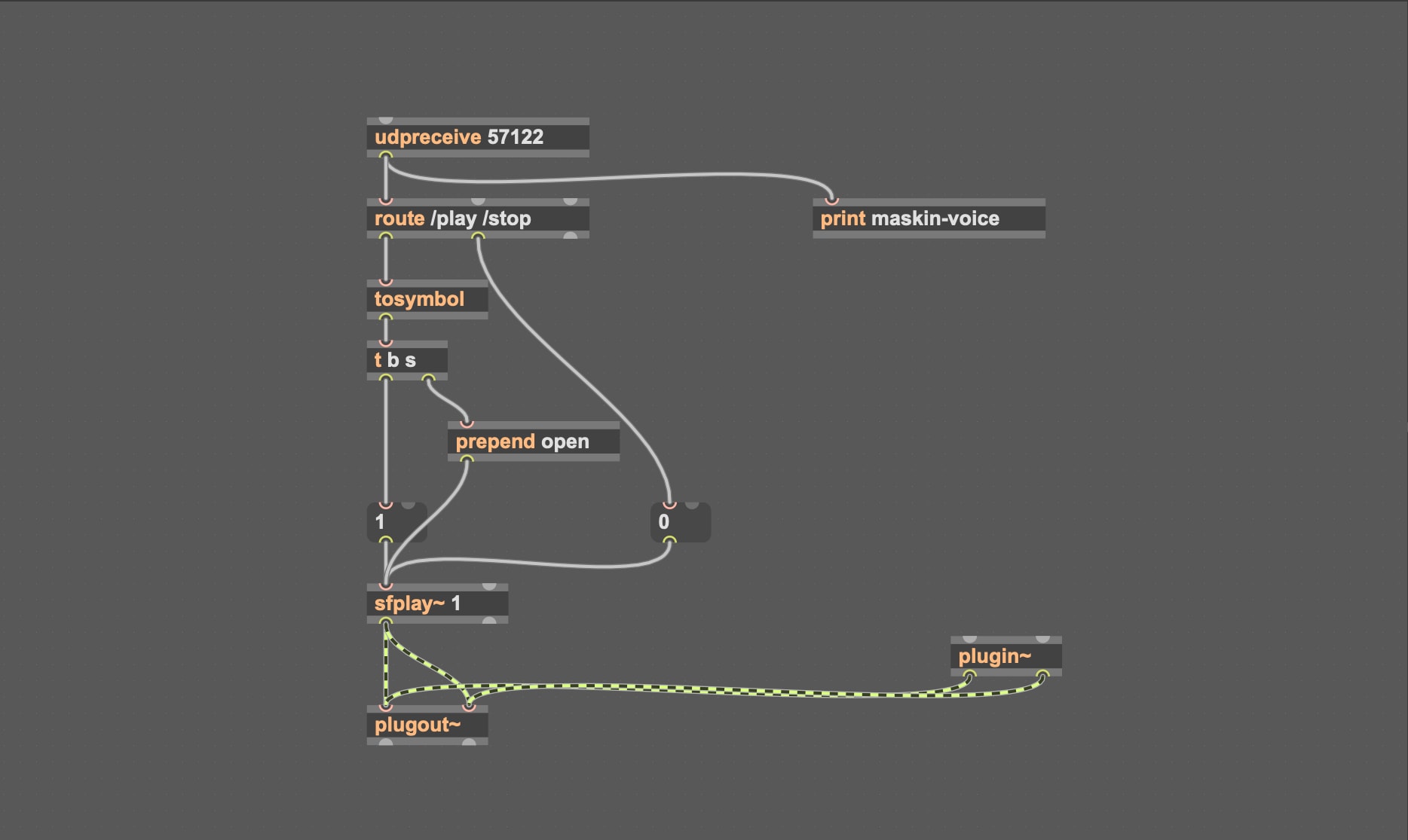
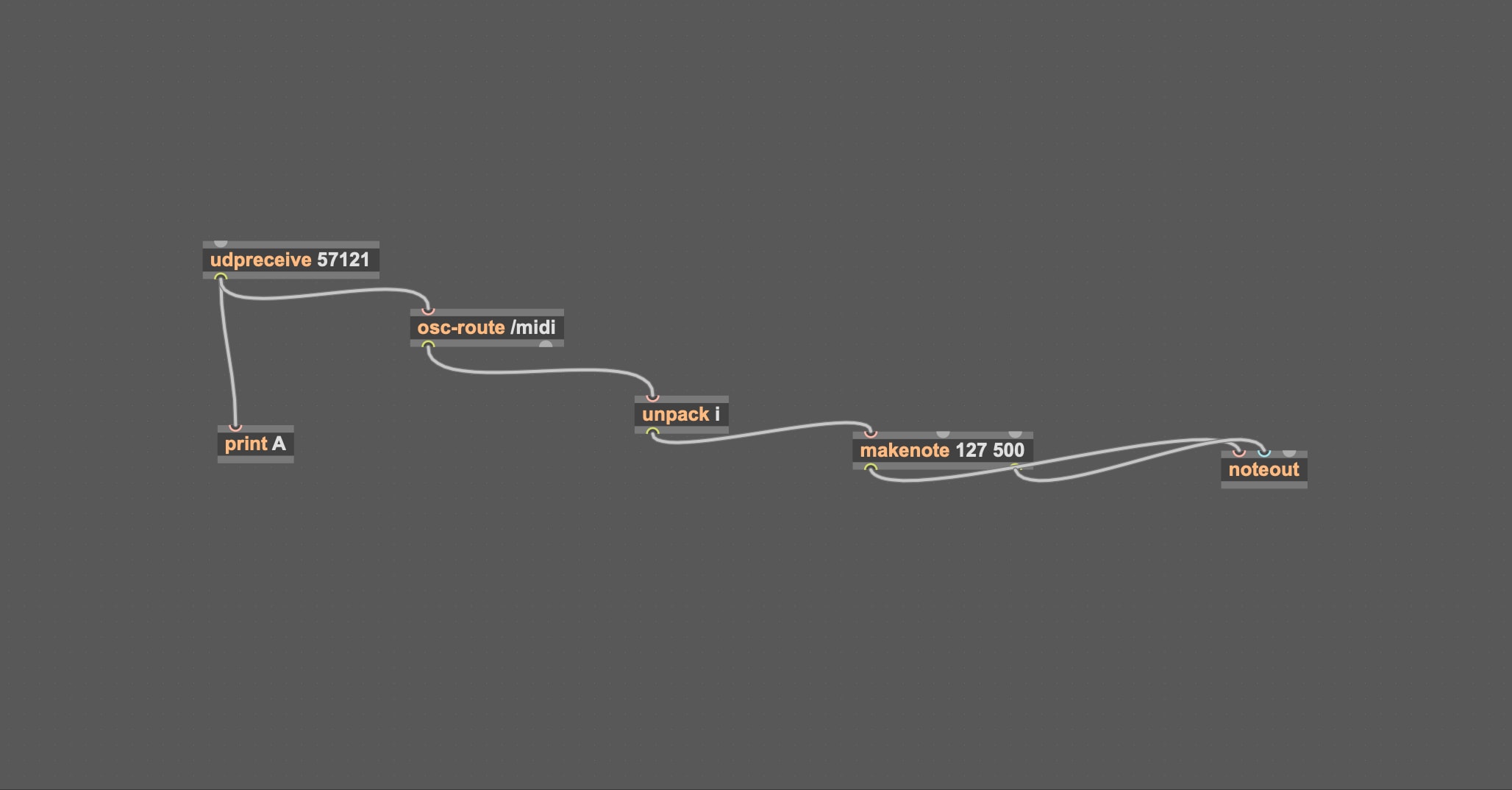
The other two are small tools for my own work. maskin voice plays a recorded poem on its track when another program tells it to, and OSC to Notes turns numbers sent over the network into MIDI notes in Live.
soundSpeedGradient is a piece of my own in which a webcam reads a hand, and the hand controls sound in various ways. p5.js and ml5.js find the hand in the camera picture, a small server passes its position on, and Ableton Live plays the samples.
It is the work that came before the Deep Leap app. The recording below is the one I made to show the development process through three versions: first the hand, then longer chains of sound and effects, then the whole body. Video captions are in Swedish.